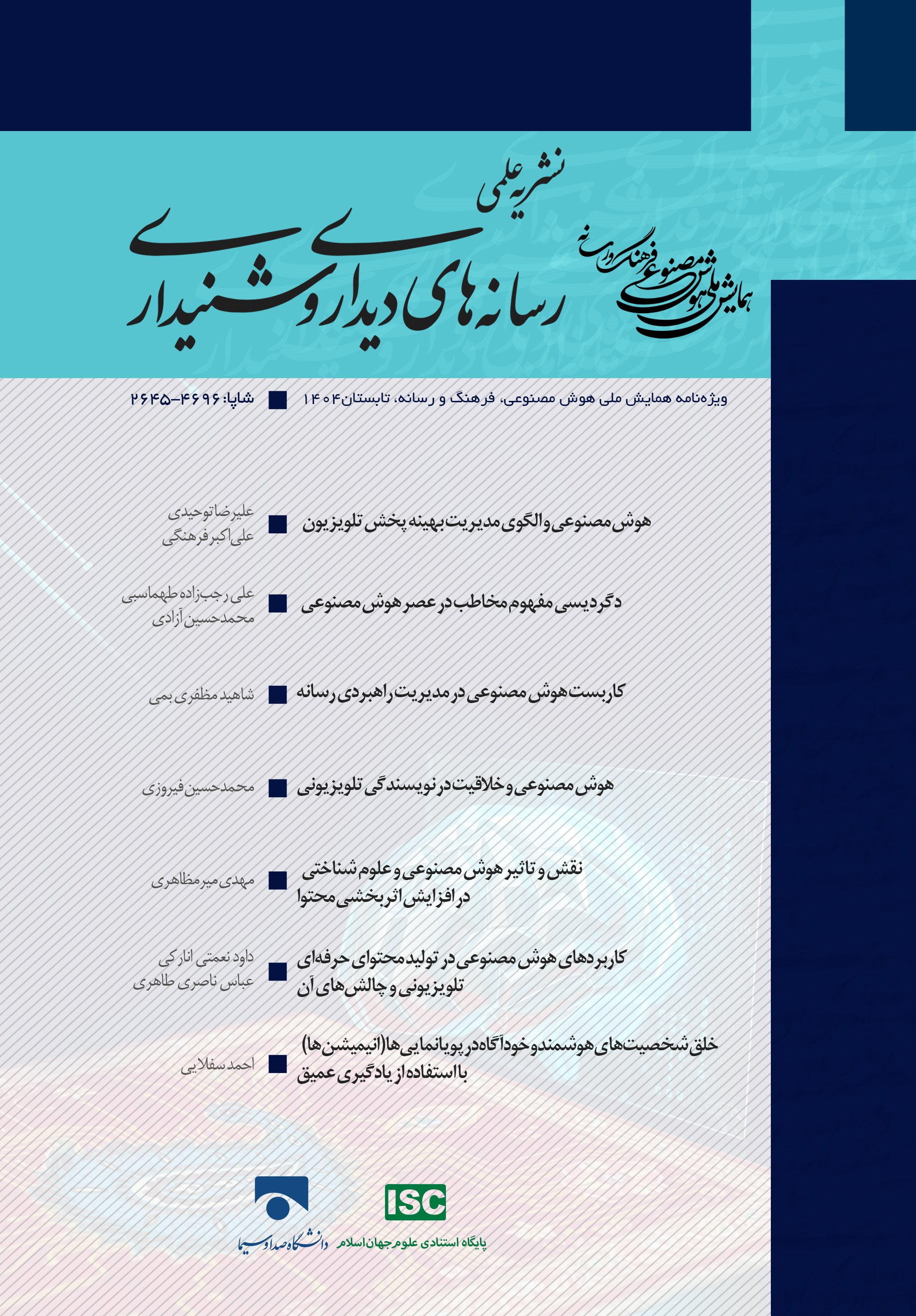
فصلنامه علمی رسانه‌های دیداری و شنیداری

فصلنامه علمی رسانه‌های دیداری و شنیداری

کاربردهای هوش مصنوعی در تولید محتوای حرفه ای تلویزیونی و چالش های آن

نوع مقاله : مقاله پژوهشی

نویسندگان
1 گروه روزنامه نگاری، دانشکده ارتباطات و رسانه، دانشگاه صداوسیما، تهران ، ایران
2 گروه روزنامه نگاری، دانشکده ارتباطات و رسانه، دانشگاه صدا و سیما، تهران، ایران
چکیده
مقدمه: هوش مصنوعی((AI در حال تبدیل شدن به ابزاری قدرتمند است تا بسیاری از فعالیت های بشر را به انجام رساند. این فناوری در عرصه فعالیت های رسانه ای و بخصوص تلویزیون بیشترین کارایی را پیدا خواهد کرد، هرچند که جنبه هایی از این کارایی مشخص شده است.

هدف اصلی پژوهش: هدف این پژوهش شناخت کاربردهای هوش مصنوعی در تولید محتوای حرفه‌ای تلویزیونی و نیز شناسایی چالش‌های استفاده از این فناوری در صنعت تلویزیون است.

روش پژوهش: در این پژوهش از روش فرا ترکیب (Meta-Synthesis) بهره گرفته شد، داده‌های کیفی موجود در17مقاله علمی انگلیسی که در سال های 2023 و 2024 در ارتباط با موضوع این مقاله انتشار یافته اند، بررسی و تحلیل مضمون شدند، مفاهیم مشترک در ارتباط با کاربردها، فرصت‌ها، تکنیک‌ها و چالش ها استخراج و به سوالات تحقیق پاسخ داده شد.

یافته های پژوهش: از مهمترین یافته های این پژوهش می توان به ساده و بهینه سازی فرآیندهای تولید محتوا، افزایش جذابیت، سرعت بخشی به روند تولید، کاهش جنبه‌های یکنواخت و مکانیکی کار روزنامه‌نگاری، چندزبانه بودن وکاهش هزینه های تولید اشاره کرد. همچنین از بین رفتن فرصت‌های شغلی و خطر تولید محتوای نامناسب به عنوان مهمترین چالش های استفاده از این فناوری مطرح بوده است.

نتیجه گیری پژوهش: هوش مصنوعی فرصت‌هایی را برای نوآوری فرآیندهای تولید محتوا فراهم کرده است، اما استفاده از این ابزار نیازمند مدیریت هوشمندانه و توجه به اصل مسئولیت اجتماعی برای بهره‌برداری کامل از ظرفیت‌های این فناوری است تا تحولی مثبت و کارآمد ایجاد شود.
کلیدواژه‌ها

عنوان مقاله English

The Applications of Artificial Intelligence in Professional Television Content Production and Its Challenges

نویسندگان English

davood nematianaraki 1
Abbas Naseritaheri 2
1 Associate Professor, Department of Journalism, Faculty of Communication and Media, IRIB University, Tehran, Iran
2 Assistant Professor, Department of Journalism, Faculty of Communication and Media, IRIB University, Tehran, Iran
چکیده English

Introduction:

Artificial Intelligence (AI) is becoming a powerful tool capable of performing many human activities. This technology is expected to be highly effective in the field of media, particularly in television, although some aspects of its functionality have already been identified.


Main Objective of the Study:

The aim of this study is to explore the applications of artificial intelligence in the production of professional television content and to identify the challenges associated with using this technology in the television industry.


Research Method:

This research employed the meta-synthesis method. Qualitative data from 17 English-language academic articles published in 2023 and 2024, related to the subject of this study, were examined and thematically analyzed. Common concepts regarding applications, opportunities, techniques, and challenges were extracted and used to answer the research questions.


Findings:

Key findings of this study include the simplification and optimization of content production processes, increased appeal, acceleration of production timelines, reduction of monotonous and mechanical aspects of journalism, multilingual capabilities, and cost reduction. On the other hand, job displacement and the risk of generating inappropriate content were identified as the most significant challenges of using this technology.


Conclusion:

Artificial intelligence offers opportunities for innovation in content production processes. However, effective utilization of this tool requires intelligent management and adherence to the principle of social responsibility in order to fully harness its potential and create a positive and efficient transformation.

کلیدواژه‌ها English

Keywords: Artificial Intelligence
Television Content Production
Content Attractiveness
Social Responsibility
Intelligent Content Management