نوع مقاله : مقاله پژوهشی
عنوان مقاله English
نویسنده English
With the rise of advanced technologies and the emergence of new media, computational political advertising has become one of the most significant tools for influencing public opinion and shaping individual and social behaviors. The role of artificial intelligence (AI) in this context raises fundamental questions about how information manipulation affects individuals' decisions and behaviors.
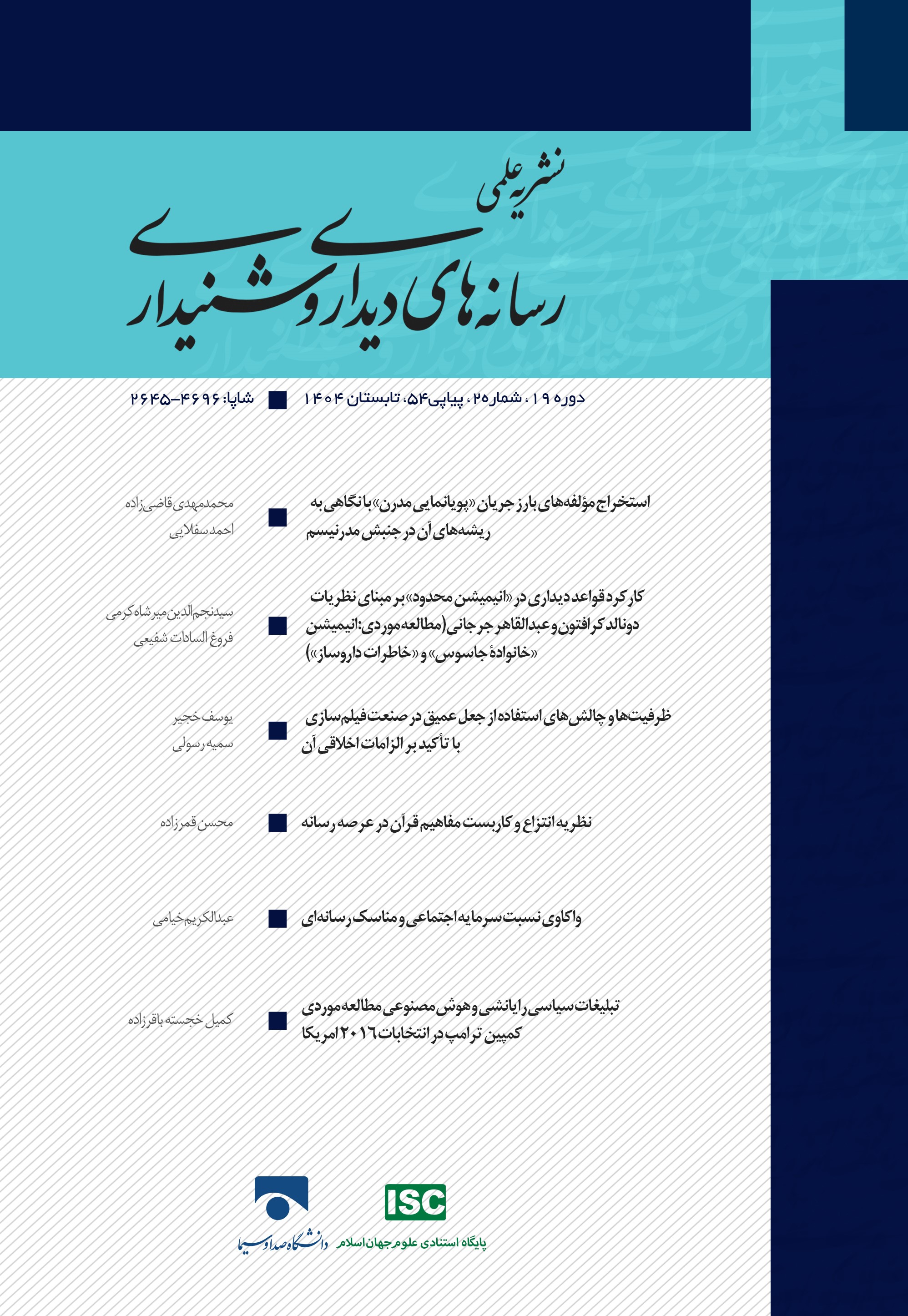
This study, conducted through a library and documentary research method, seeks to address this question by reviewing key theories and analyzing the case study of Donald Trump’s 2016 U.S. presidential campaign. It examines the role of AI in designing and executing digital political campaigns.
The findings indicate that AI, through the analysis of big data, has enabled the creation of personalized messages for each individual within the network. By managing social bots and orchestrating a structured presence on social media, these messages are delivered to specific users. This model has facilitated targeted advertising to influence audiences effectively.
Consequently, AI-driven digital campaigns have established a novel five-layer model:
1. Broadcast and traditional media layer,
2. Websites and Web 1.0 layer,
3. Social media and connected political accounts layer,
4. Social media and networked celebrities layer,
5. Social media and intelligent bots layer.
کلیدواژهها English